
Getting through it together
Crazy P on loss, hope and the healing power of dance music

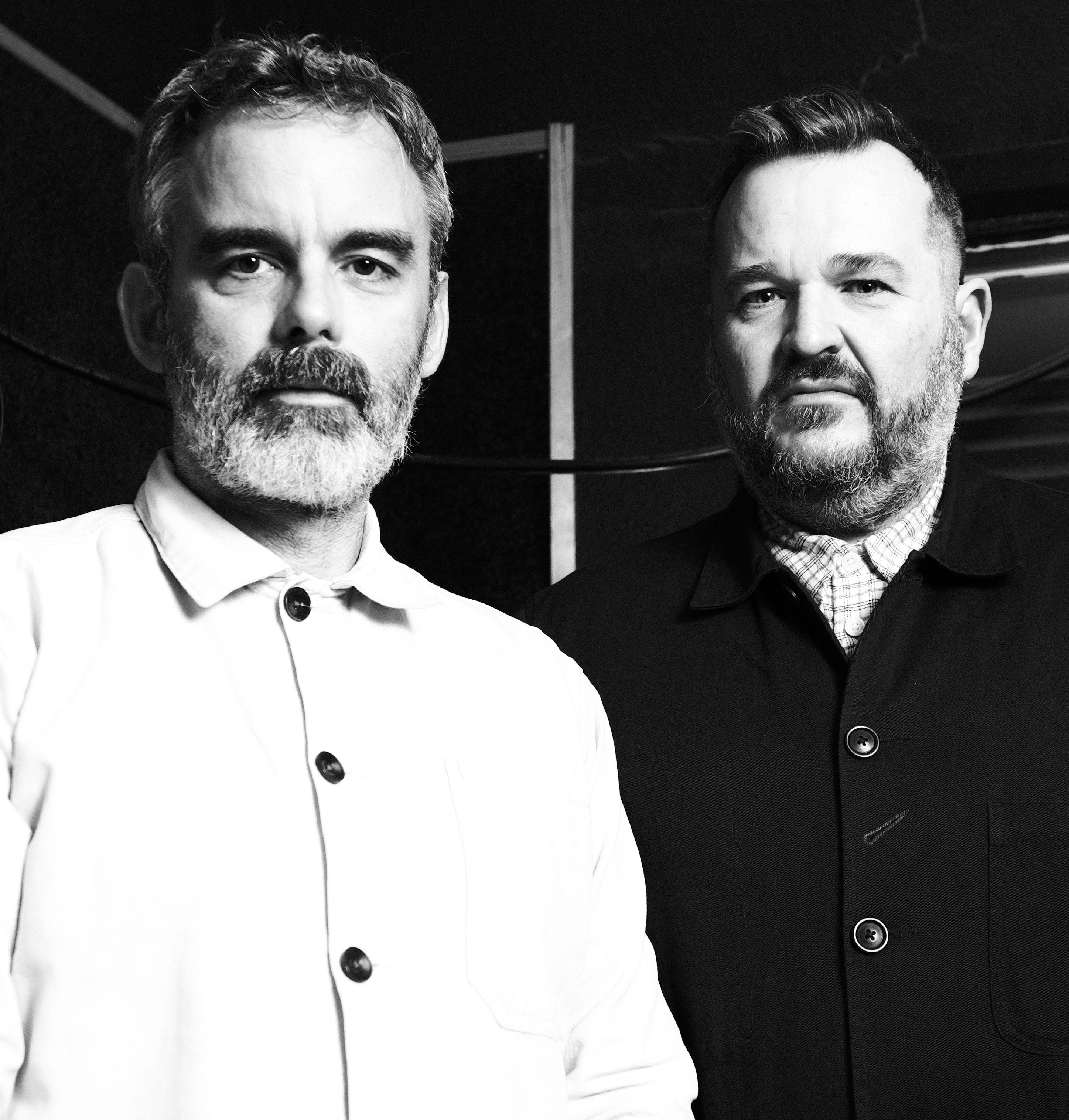
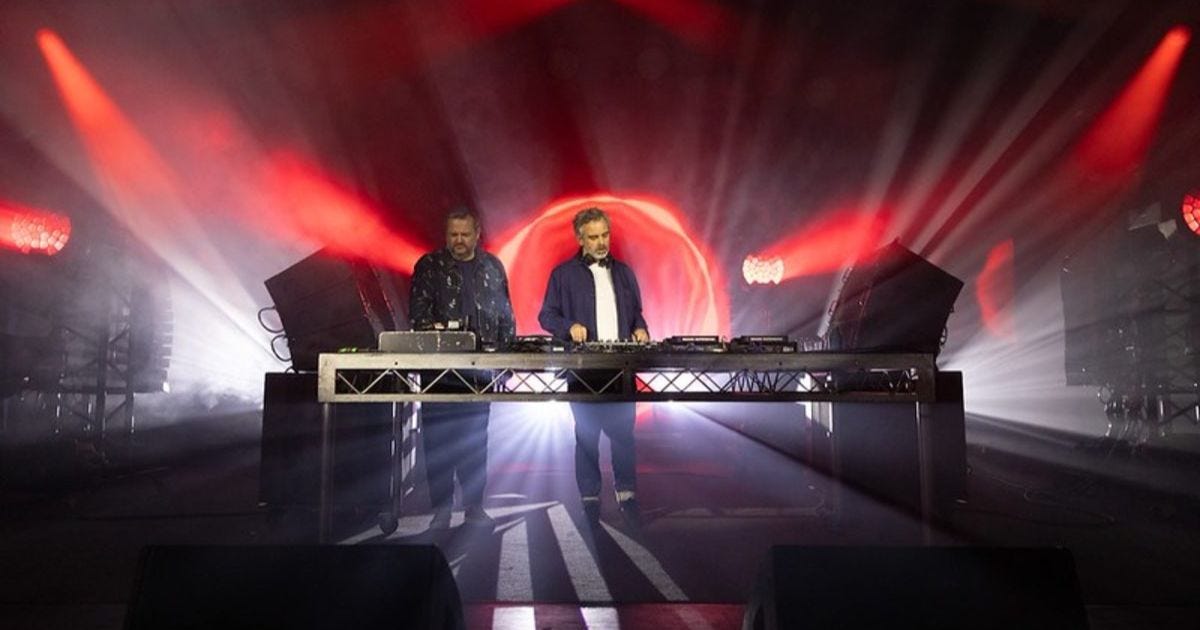
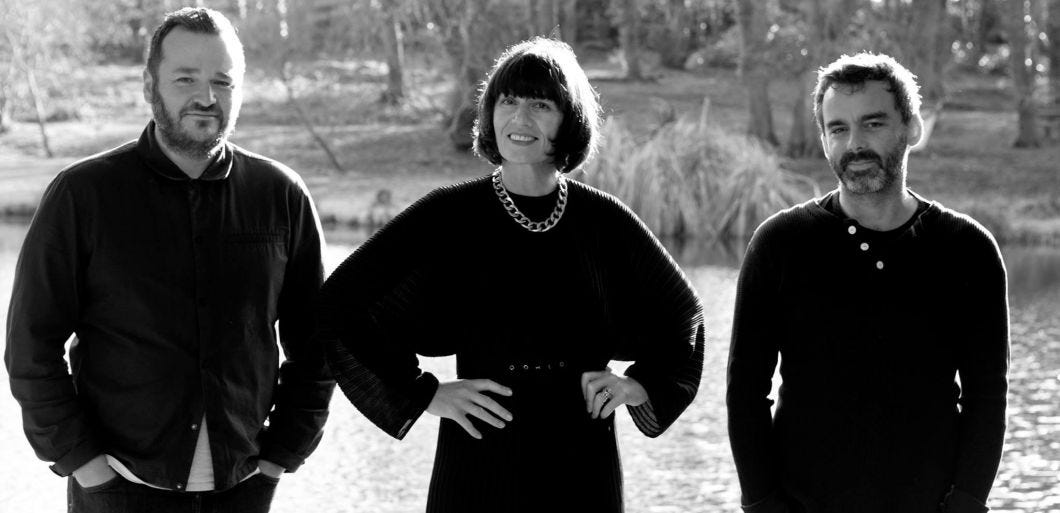
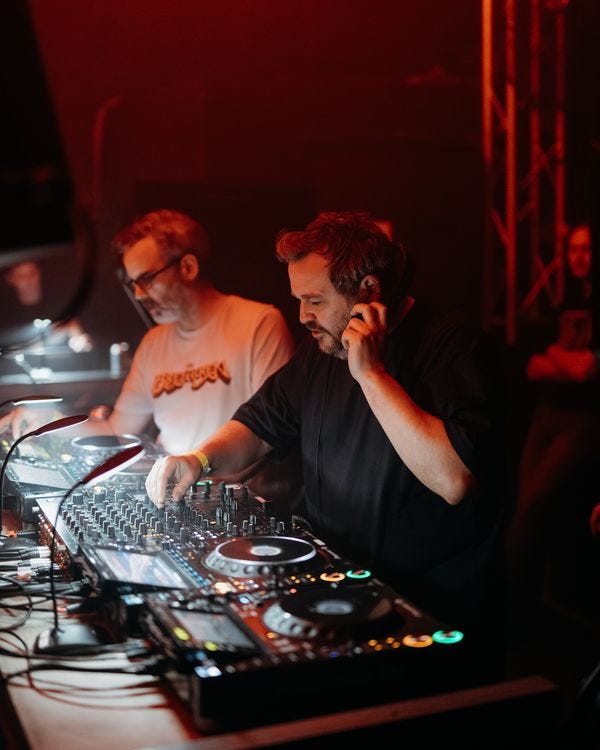
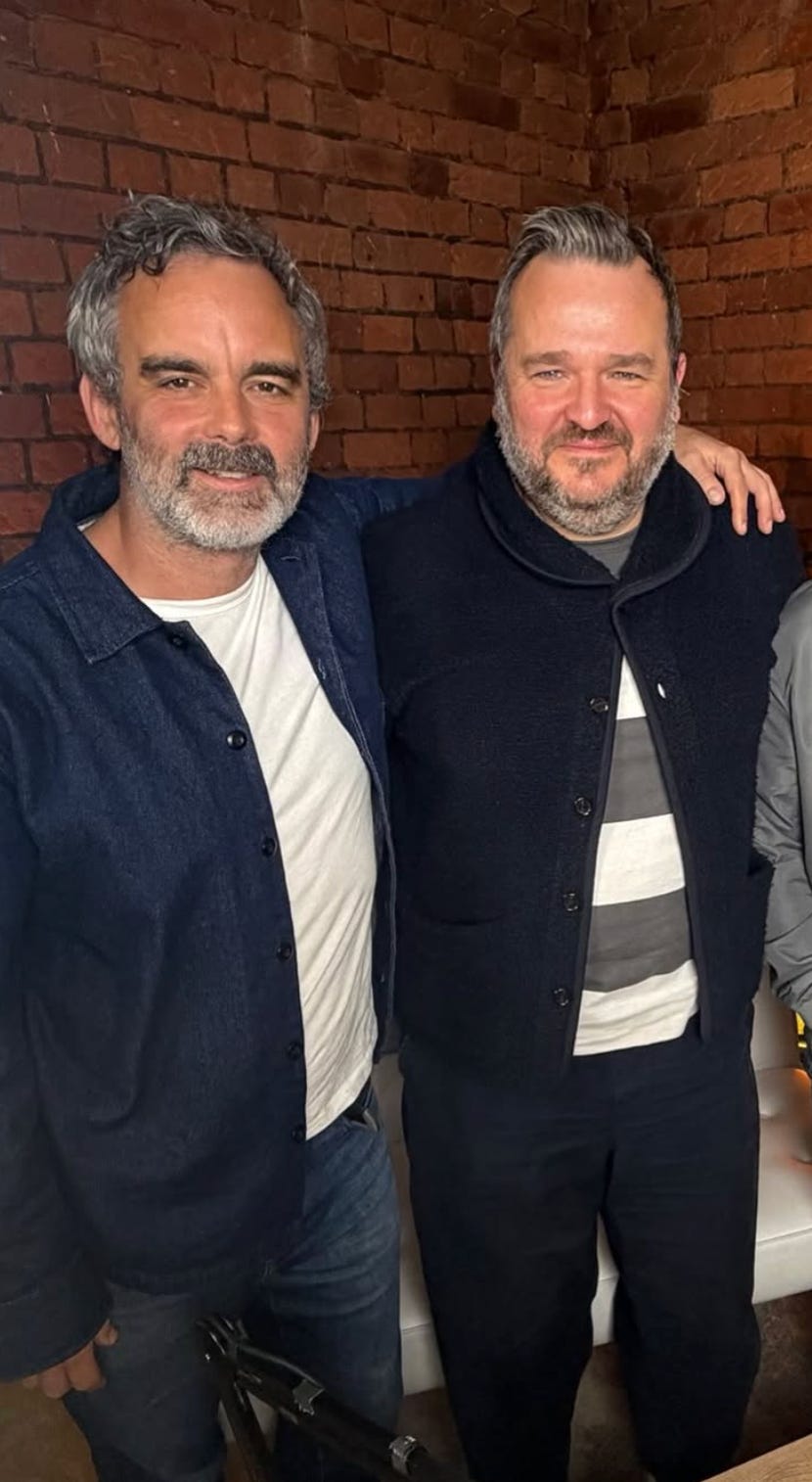
I scored a last minute ticket to Golden Plains in March and drove up to the festival on the Sunday, staying for just one night. An acid trip went a little haywire and I ended up cocooned in the back of my car, parked close to the rear of the amphitheatre. I couldn’t see the stage but I had the boot open and the sound was incredible, and as Crazy P’s core producers and DJs, James Baron (aka Jim aka Ron Basejam) and Chris Todd (aka Hot Toddy) took to the decks, my teary existential crisis slowly dissolved until I found myself pumping my fist in the air, helplessly elated. Everything was going to be ok. The set, to me, played like a tribute to the late, luminous frontwoman Danielle Moore, and a celebration of life. The duo formed their electronic group in Nottingham in 1996 — thirty years ago. The Australian tour in March was their first time in the country since Moore tragically took her own life in September 2024. In a statement from Moore’s family following the coroner's inquest, her husband James Ensell wrote, “if any good can come from her death, perhaps it will be increased awareness and understanding of the impact that the perimenopause can have on women’s mental health.” A few days after their Golden Plains set I chatted with Jim and Toddy in Melbourne about hope, creativity, longevity, carrying on in the face of tragedy and the importance of music in dark times. It was an honour to speak with them, both lovely, generous people and two of my favourite producers.
*****
Annabel: I was at Golden Plains on Sunday night, and your set was amazing. How did it feel?
Chris: It felt good, actually, yeah. Going on after Basement Jaxx, we were a bit worried.
A: It was certainly a spectacle, their set.
Jim: Yeah, and there was an element of, this could be a misprogramming for us? Like, “we’re gonna jump on and play some records now, play some groovy records for an hour and a half [laughs].”
C: But it was actually the gig I’ve enjoyed the most so far.
J: Yeah.
A: There are 12,000 to 14,000 people there, so it’s a big crowd.
J: Yeah, it was great, and the production crew were great, they set it up very nicely. It was sort of insular, it felt quite small where we were, which helped. It could have been a massive stage and that probably would have made my knees tremble a bit!
A: When was the last time you were in Australia?
C: For me, it was 2023, and that was the first time I’d been here since 2012, but Jim’s been out here a few times in between.
A: You do have quite a strong following here, it seems.
J: Well, I think we did, but it’s felt like our appeal has narrowed a bit here as the years went on. We started doing more shows in Europe and at home. Maybe initially we had a bigger following here.
C: It [Australia] became our main territory quite quickly. In 2001-2002 we were doing 100-200 capacity venues back home and then came out here to crowds of 1000-1500, but that was back in the early days.
J: It’s been a surprising tour in that sense [with more fans coming out]. I think with everything that’s happened, people have been really showing support. Every gig’s been great.
A: I’m glad to hear it. Over the past two years, which gigs would you say have felt the most meaningful or special?
C: The big one for us last year was probably Love International. It’s always been such a big gig for us, especially for Danielle, and we do a boat party. We’ve been involved with this festival since the beginning and we’ve played every single one bar one.
J: Glastonbury as well, last year. That’s one we’ve done regularly as well. The guys at Silver Hayes made some little tributes to Danielle on the site. All our families came, all our crew came. Glastonbury felt like it was a bit of a relief.
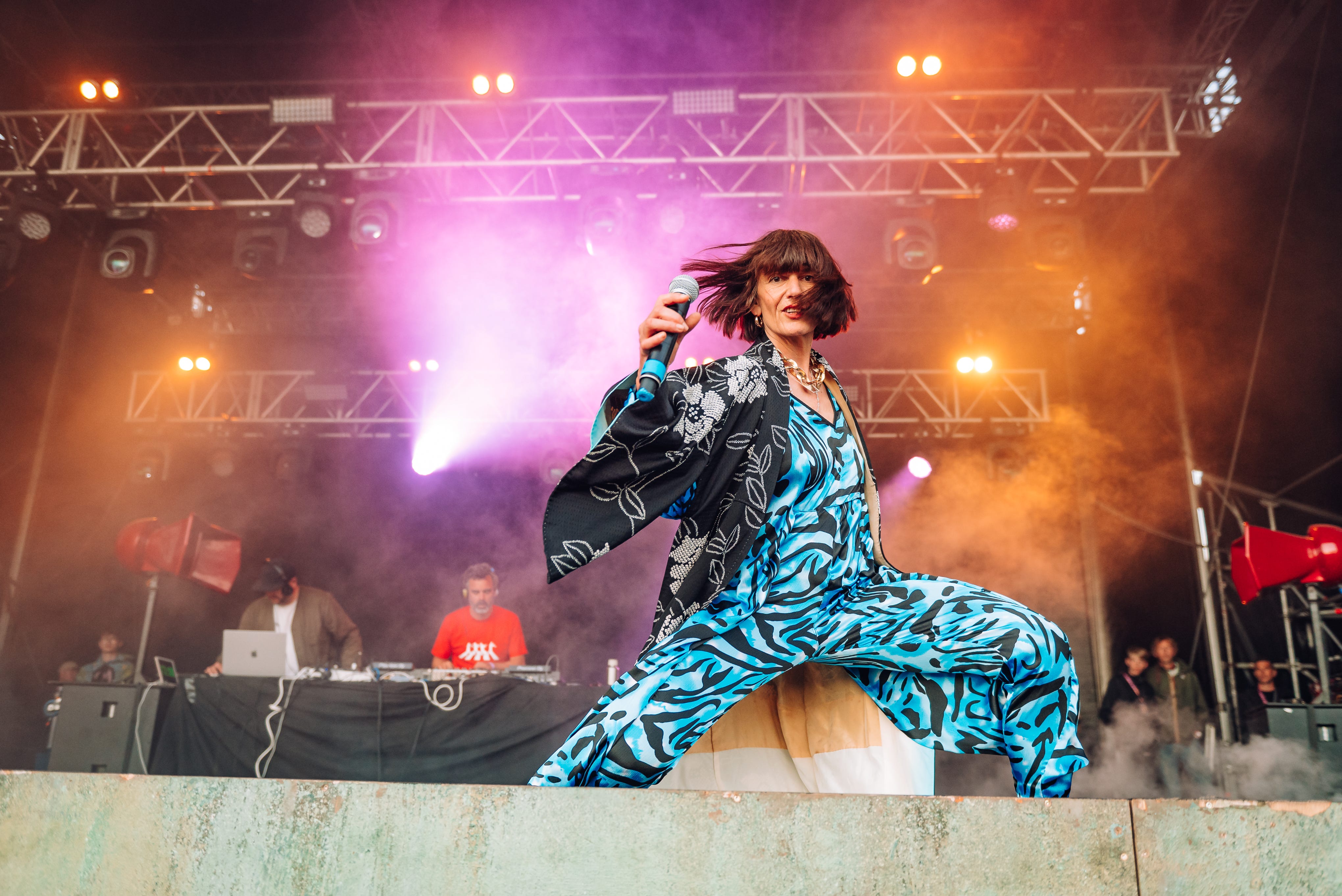
C: There were hurdles to get over along the way. You kind of build up expectations, “it’s going to be emotional”, and it was, but on the whole they were positive experiences.
J: I think a lot of those promoters have kind of pushed us to carry on. Dave from Love International said, “I just want you to know you can carry on if you want.” Because I think there have been times when we probably thought it wouldn’t happen. You just don’t know what happens after, it’s difficult to gauge. But they were confident in us and pushed us along, which was great. Looking back now, it was probably quite important.
A: You feel like you needed a bit of a push at the time?
C: Yeah, definitely, especially in the early days. I think just to get a few gigs under our belt. And they’ve all been — I don’t think there’ve been any duffers really. From the word go, the gigs have been great, the reception’s been amazing. Nothing too overwhelming, everyone’s been pretty respectful about it.
A: Has it just been DJ gigs so far that you’ve been doing?
J: Yeah. We’ve gotten together with the band and played, just to get together, because that’s something that we miss a lot. So we disguised it as a social thing but we made quite a lot of music too.
A: Oh, you did?
J: Yeah. It was a no pressure situation but we’re just working out, in terms of the live show, where we go from here. Dani can’t be replaced so whatever we do, I think it’s going to be a different vibe.
A: You mean musically as well?
J: Yeah, I think we have to try and look forward. I think the last thing I want is for anybody to be singing those songs again, I don’t think it could be achieved. She was unique. And whether we wanted to or we didn’t, I think it would be hard to do. I think we’re both on the same page there [Chris nods]. We’ve had a few requests to do tribute gigs and that doesn’t feel like the existence I want. I think looking forward and trying to work out a new format is definitely more exciting.
C: But that’s something we can do in the DJ sets, we can play a few songs as a bit of a tribute.
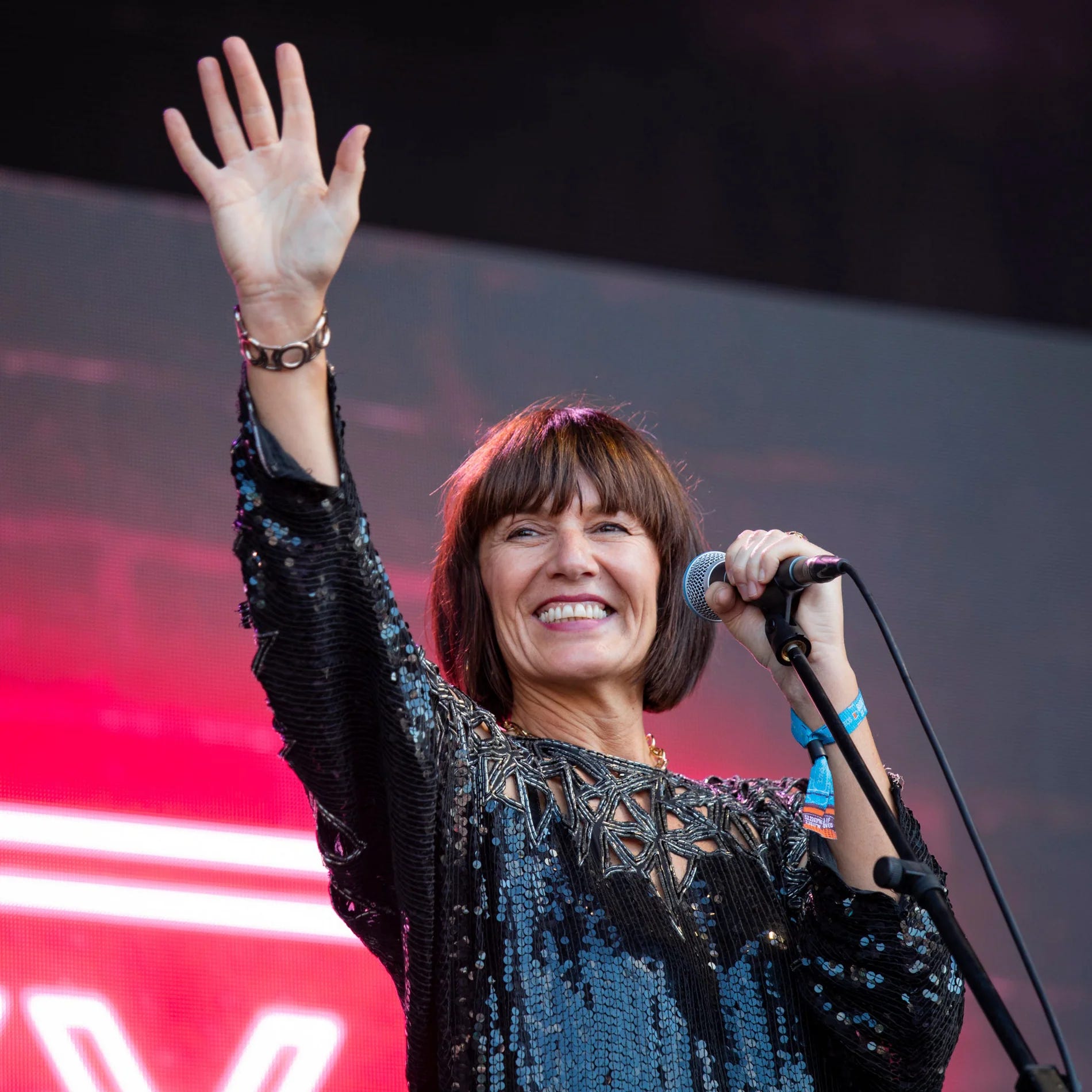
A: It’s funny, I always had this image of Danielle — and I think a lot of people did — as kind of invincible. She was so charismatic and so confident on stage. After she passed I was listening to an interview she did with Bill Brewster and I was surprised to hear how self-effacing she sounded; almost a bit unsure of herself. What was your experience of Dani, and how did her on-stage persona contrast with the Dani you knew off stage?
J: It’s just as you say. She loved performing and there was a switch that went on and she became invincible, from the outside. But backstage, she’d generally be nervous. She was strong, but there were a lot of other things going on.
C: I think it’s something that’s shared with a lot of musicians, imposter syndrome. It’s quite common, and it wasn’t necessarily an issue that led to what happened but I think generally, she was quite self-deprecating and laid back…she almost had two sides, in a way.
J: Ironically, towards the end, she’d really grabbed hold of her art. She was more confident at the end than she ever had been in every sense — recording, writing. She was more focused. She believed in herself.
C: She was so proud of that last album and she was looking forward to touring.
J: She got a lot more involved in the studio process. She was calling the shots, which is something that we [Chris and Jim] had mainly done up to a certain point. She seemed like she was gaining confidence.
A: Last year, you guys pulled out of playing Lost Village and said in your statement that you thought long and hard about it, but you felt it’s what Danielle would have wanted as well. She had a strong social conscience that came through on the last record especially. Do you feel any kind of responsibility to uphold that?
C: Yes, to a certain degree. It’s something that we all share. She was a very passionate advocate for supporting the underdog. She has often been described as an empath, she would feel things deeply and this would cause her to become quite a vocal advocate. In some ways you do feel like you want to take on the mantle. You want to think, “what would Dani do?” But I think it’s a trait that we share.
And it’s always a tough call, those things, because it’s always not a clear cut yes or no. Where do you draw the line? How complicit are we in the way that we live our lives? But I think when it comes to festivals, and especially because — certainly with the Gaza conflict — we’ve supported the Palestinian cause and done fundraisers and things like that. So it felt like this was important.
J: But again, it’s difficult because the Lost Village guys…we’ve done that festival from the beginning. And they’re lovely people.
C: It’s one of our favourite festivals.
J: But unfortunately they just didn’t do enough when the deal was done. It’s a great shame because we’ve had a long journey with those guys and we’ve played the same slot every year. You knew what to expect, our show was always a bit of a thing at the festival. So it was tough to let go of but Dani certainly would’ve called it, so it felt right.
A: I believe you’re celebrating thirty years of Crazy P this year, right?
J: Yeah. We should be making a bigger deal of that really.
C: We said that about 25 years and 20 years as well so I think this time, we should maybe do something!
A: Your sound has been relatively consistent and cohesive across the decades — sleek, soulful disco house — but I wondered if there are ideas or sounds you bring to the project that are specifically Jim or Chris?
J: We’re both operating everything. I play keys in the band, Toddy plays guitar, but it doesn’t only happen that way. I play guitar too and Toddy plays keys really well. So it’s really…oh god, I’m using the word “organic” already. But it is a bit like that. Toddy might be doing the computer; I might be. He might be on the keyboard; I might be. But we do have our strengths. Chris in terms of his mixing, and I’m classically trained which helps with string arrangements.
C: I think stylistically as well. Maybe if you look at our solo projects, that’s where our individuality kind of comes out, and you can see that influence coming into Crazy P. We complement each other and our different styles subtly, it’s not like we’re poles apart. I think musically, we just clicked. That’s what’s kept us going — one of the things that has kept us going anyway.
A: From the outside, it doesn’t really seem like you’ve experienced any creative ruts.
J: I mean, it’s a relationship so you’re going to have ups and downs. But the downs have never been that down. We usually sort it out pretty quick and it’s usually not even music-related. It’s probably more to do with personalities.
A: Right. I mean you’ve spent a hell of a lot of time together in the past 30 years.
J: Yeah. But there have never really been any problems in the studio. We usually gravitate towards whatever the better idea is.
C: I think we’ve also learned to recognize what’s worth fighting for. Some things aren’t worth the argument. If someone really likes something and the other’s not that fussed, the person who’s feeling really strongly will usually argue their case and win the other person over.
J: It’s a polite debate [laughs]. There’s never been any big argument, so we’ve been lucky in that respect.
A: What’s your favourite Crazy P album, or the one you’re most proud of?
C: I’ve always got a soft spot for Walk Dance Talk Sing.
A: Me too.
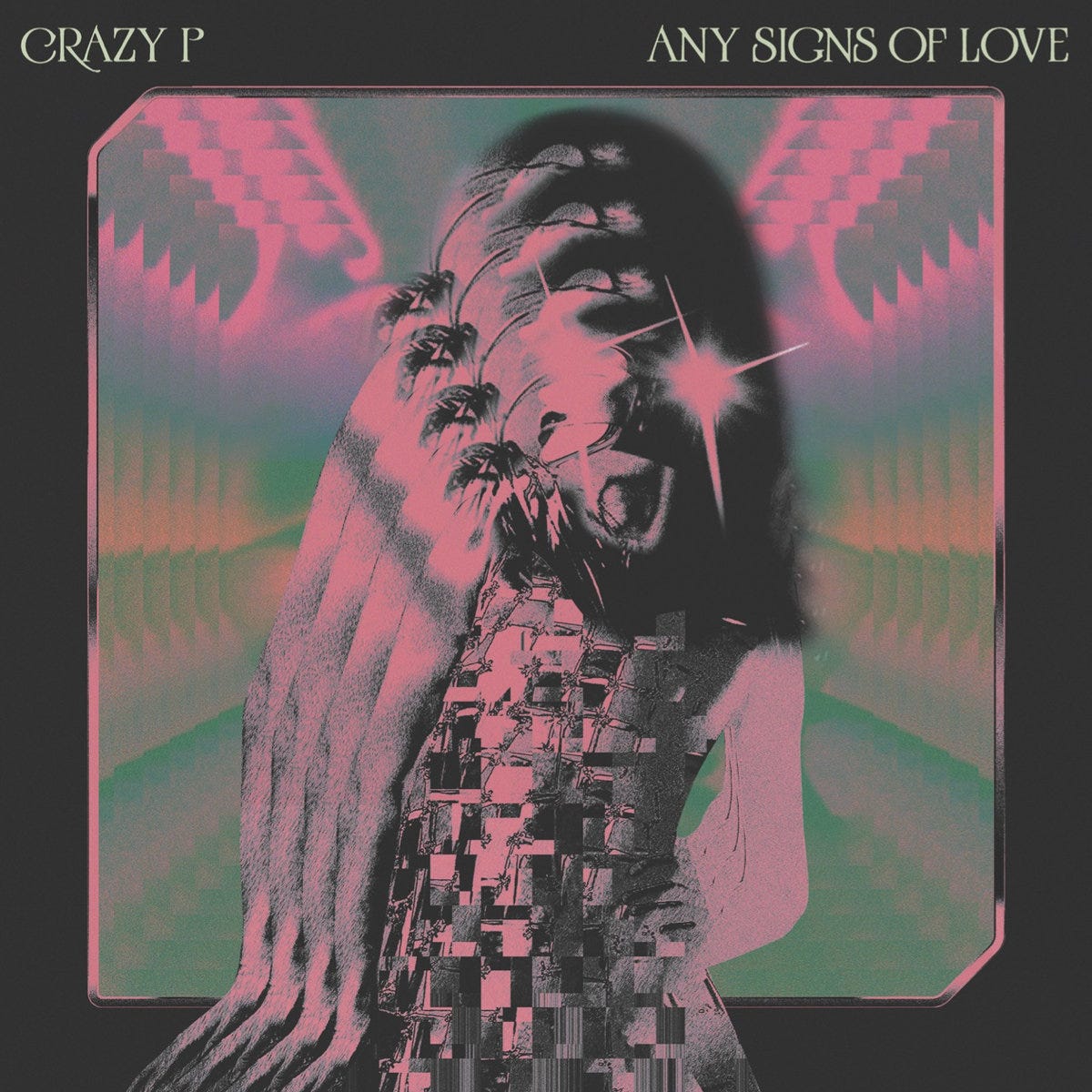
C: I think that was Danielle’s favourite as well. I’m proud of all of them, I’m really proud of the last one [Any Signs of Love], especially the way Dani’s songwriting evolved on that album.
J: Also stylistically, it’s a bit of a change. Dani pushed that, she wanted things a little bit more minimal. Me and Chris tend to throw the kitchen sink at it production-wise, we always have. But with that record, she really wanted it to be stripped back and that’s the sound of the record. It’s a case of making the sum of the parts work, and there’s not many parts. If you can make a drum and a bassline and a vocal work and there’s not much else happening, that’s a real skill. We’d be adding the strings and the bells and whistles, generally. Any Signs Of Love was kind of the antithesis, so I really love that one. Also Walk Dance Talk Sing. When We On is another one. We were just kind of finding ourselves a little bit. It’s the record where we just let go of all our preconceptions — where we thought we should be, the music we thought we should be making.
C: It was quite a significant turning point, that album.
J: Yeah we just let go and it just became, alright, let’s just do it.
A: There’s so much feeling in Dani’s voice and in her lyrics. Do you think people maybe underestimated how much of herself she put into those songs?
C: Possibly. I think we did. I speak for myself actually but I often found out in retrospect how personal some of those songs were having spoken to her afterwards.
J: I think when you’re in the heat of making it, you’re not really thinking about a deeper meaning. It’s like Chris says where later on when you’re speaking to her, things become apparent. But in terms of how other people perceived it, I don’t know. She always wore her heart on her sleeve, she was like that as a performer. So I guess you can put two and two together and people would see it as an emotional statement.
A: Tell me about White Elephant (a collaboration between Jim, Chris and B.J. Smith of Smith & Mudd). I know the World Elephant Day album came out not too long ago and I actually hadn’t heard of Smith & Mudd til I looked them up.
J: They’re big on the Balearic sound. There’s a label called Claremont 56, it’s a really big label back home, the British Library holds all of their catalogue. Paul [“Mudd”] Murphy runs it, they’ve got some amazing records out of Ben’s work with Paul over many years on that label. But we’ve probably known Ben [aka B.J. Smith] for probably a bit longer, because Ben was in Toddy’s course at uni. I don’t know how it came about, but we just decided to get together for a session around 2010. We made a couple of EPs but then everybody’s busy, Ben makes a lot of music for TV and sync. We’ve made so much music together and not done anything with it, but in lockdown we started working on it and getting it all together. And Ben is a fantastic talent, he works in a totally different way to us.
A: How so?
J: Well, with Crazy P you’re sort of narrowing in on a specific sound whereas Ben is really just taking from everywhere and telling us his techniques as well. He’ll try and get a sound out of a fucking jar of coffee.
C: Yeah, he’s quite unique with the sort of things that he does. I played his guitar with a bow and there are all these weird, quirky things he does, so it very quickly became quite an anything goes project. It was lots of fun, the early recordings, it was basically just the three of us having a laugh.
J: It was all kind of done years ago, we were just gonna sneak it out on Bandcamp. But then our manager heard it and really got behind it.
A: Ah ok. I thought maybe this was a new sonic direction for you guys.
J: No, nothing was new. We wanted to get it out there and it’s just taken a while to do it. But we got together for a live session a few weeks ago and it definitely reinvigorated my feelings about the project in terms of going forward.
A: Are you sitting on a bit of new Crazy P music as well?
C: Yeah. The session we did with the band that Jim mentioned earlier, we basically just took a mic in a room and recorded a load of ideas and then we started working out some of the stronger ones. One of them we’re playing out a lot, actually, it’s been going down really great. We’ve got another few, another three that are really strong. They’re all really good, we’re hoping to get an EP out at some point.
A: Nice.
J: The direction’s probably harking a little more to our earlier stuff, so samples and bass. There are vocals but they’re all sort of samples. I mean, songs like “Heartbreaker” and “One True Light”, they’re essentially that, so we’re just going along with that as opposed to doing full vocals at the moment.
A: Ok, one more question and I’ll let you go. More than ever right now it feels a bit like the world has gone to shit, to say the least. But your set at Golden Plains, I actually found it really life-affirming in a way that I didn’t expect it to…I don’t know why I’m getting emotional.
J: Don’t worry, you’ll probably set me off.
A: It sounds a bit corny but it made me think about joy as resistance. And I wondered how it feels to you both to be DJing in these times, and what music means to both of you as a source of joy and communion.
C: I think it’s become more poignant than ever now. It’s essential. It’s very easy to lose hope with the amount of stuff that’s being bombarded at us, especially with the way that it’s very divisive. Politics is divisive but I think music has always been about bringing people together. The disco scene and the house scene especially has always been about inclusivity and shouting for the maligned and the trodden-upon, and now it’s also it’s a way of giving you some hope. Sometimes you just have to be reminded that there’s still hope in humanity, and that’s what you get from people coming together on the dancefloor. It’s like no, we’re actually alright, human beings, we’re not all fuckwits and sociopaths.
J: And on the base level you can just forget about everything for a while and let go and just dance. And like Chris said, the culture of the music just helps give people a bit of hope.
C: Hope was a big word of Danielle’s, she had this big purple flag with the word hope written on it and it was going to be her stage prop when touring the new album. We were lucky enough to do two shows before the album came out where we were playing the new stuff and she came out with this flag. And hope is exactly what we need to hold onto so we can keep going. A lot of this stuff is out of our hands, so we can feel like we have no agency, but we can do certain things.
A: Right. And music can also recharge us and make us feel more of a sense of potency and agency, especially when we experience it collectively.
J: Definitely. Luke Una on his radio show, he’s constantly saying, let’s get through this together. And he and Dani were close friends. I think it’s good to hear that, it’s good to share those feelings and hope that people listening can find strength in that.